ค้นหาบล็อกนี้

แสดงบทความที่มีป้ายกำกับ Chiang Mai แสดงบทความทั้งหมด

13 ก.ย. 2553

Doi Ang Khang National Park


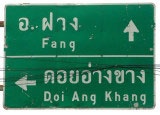
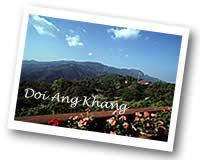
Doi Angkhang, Fang District is the side of the Royal Agricultural Project accessible via highway 107, with a left turn at kilometer 137 and then along a steep winding road for another 26 kilometers to the top of the hill. It is here that substitution crops for opium are being grown including fruits, flowers, vegetables and herbs, along with other cash crops grown for the purpose of agricultural development among the hilltribes in the area, including the Luha, Pha-Lhong, Yunnanese and Thai Yai. At Doi Ang Khang visitors can see plants being cultivate in this cooler climate including apricots, peaches, plums, carrots, salad greens and beautiful flowers such as carnations, roses, asters and chrysanthemums.

There is also a packing plant within the Royal Project .Cooperative's compound where visitors can buy fresh produce. Another attractive place to visit there is the Bonsai garden with its large collection of miniaturised plants from both tropical and temperate climates. Visitors may also hire from here a pick-up truck to go to Tha Kha market. In Doi Angkhang you can also find accommodation including private lodgings.

Doi Angkhang is Bankum 1 M 5 , T. mae-ngon , A. fang , chiangmai 50320

The locals in Doi Ang Khang grow wide range of fresh produce including vegetables, fruits and herbs. Not only this, various species of flowers are also cultivated here. To contribute towards the agricultural growth of the region, several cash crops are also grown here. It will be fascinating to see the activity of cultivation on the mountain


Doi Ang Khang, also houses a Bonsai garden. The garden flaunts a large assortment of bonsai plants from various regions. The mountain also features Royal Ang Khang Research Station. It is an agricultural project station that was founded in 1969. This demonstration site was set up to cultivate and conduct a research on flowering plants, temperate fruit trees and vegetables.

Doi Ang Khang, Chiang Mai is also growing into steep popularity for mountain trekking in Chiang Mai. The mountain attracts adventure enthusiasts who love thrill and excitement. This place plays an important role in growth of Chiang Mai tourism.Doi Ang Khang features an exceptional natural beauty. It offers magnificent and beautiful views of the city. If you are planning to visit Doi Ang Khang , do carry some warm clothes, as it might get cold during the night. You can also opt to stay in several guesthouses and hotels on Doi Ang Khang . Do enjoy facilities like bird watching, mountain biking and trekking.Doi Ang Khang is a three hour drive from Chaing Mai. It is located in a rather remote part of northern Thailand, so renting your own car and driving yourself is the best way to get to the mountain park. Chiang Mai is also home to the nearest airport and offer guided tours to the mountain. Chiang Mai is easy to reach from anywhere within Thailand by bus, train, and air.
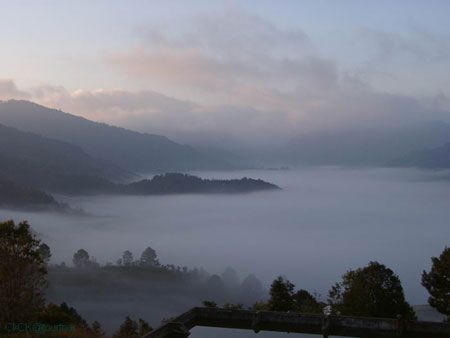
Located about 100kms north of Chiang Mai, the area of Doi Angkhang offers a remote experience that has yet to be overrun with tour buses and camera-toting visitors. The highest peak is 1300m and is accessible by car. With cool year round temperatures, it’s not surprising that Doi Angkhang is referred to as the “Little Switzerland” of Thailand. It’s possible to drive right up to the border post and gaze across a small saddle at the ramshackle Burmese army camp and sweeping landscape beyond.

The road descends into a small village located in the bowl-shaped valley from which the area takes its name and here you’ll find the plush Amari Angkhang resort – promoted as an eco-friendly lodge. Indeed they have made particular effort to incorporate local resources, including people, into their day-to-day running and have minimised their effect on the environment. The resort abuts a hillside forest reserve full of nature trails, and there are also bird-watching activities, as well as horseback riding and even mountain biking trails for the brave.
 In the nearby Doi Angkhang village, you will encounter a market where hill tribe folk sell their woven and handicraft products, and a few modest guesthouses can be found. The road continues along the valley for a further three kilometres before terminating in a forestry centre. Here you can witness first hand the successes of the King’s Project to wean the local people off opium production and into more savoury agriculture

Evidence of wide scale poppy harvesting in the past is still seen in the swathes of cleared mountainside. But today, this national Royal project, which was piloted in this area 20 years ago, has left the area covered in greenhouses. You may visit these, and purchase organic vegetables and fruit as well as potted plants, and visit the excellent flower gardens here which include a large English rose garden and rows of Rhododendrons.

Doi Angkhang
The atmosphere is quiet and peaceful with a wall of mountains in all directions. You also have the opportunity to visit some of the villages of the several different hill tribes who live here, including the Lahu, Lisu and Hmong, as well as the rare Palong. There is a settlement, Baan Nong Mai Bua, populated by the Chinese KMT who escaped to the region fifty years ago after Mao defeated Chiang Kai Shek. Even today it remains very Yunnanese in character.

2 ก.ย. 2553

Doi Suthep


Doi Suthep
Doi Suthep
Covering an area of 262 sq. km.This luxuriant Park is home to more than 300 bird species and nearly 2,000 species of ferns and flowering plants. Some hiking trails in the park pass Hmong villages while others lead to a few small waterfalls where local people come to picnicking on weekends. Accommodations are available near the park headquarters. To get there, take Highway No. 1004, its only 16 kilometers drive northwest of Chiang Mai town. The Park has interesting attractions, which include:The Roof of Thailan


Wat Phra That Doi Suthep

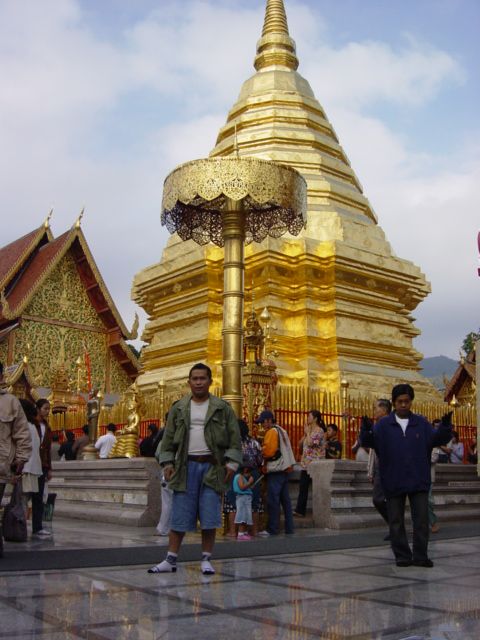
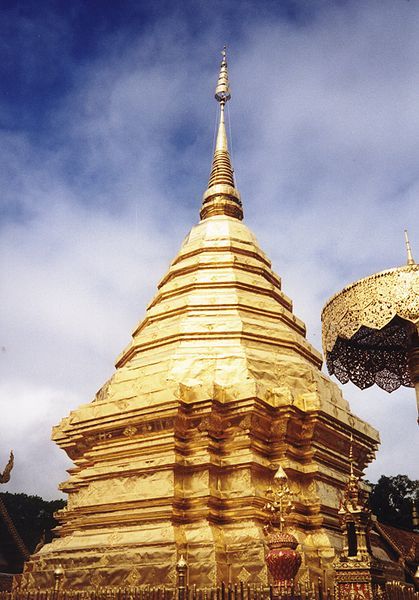
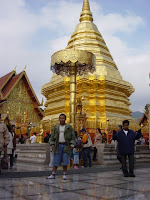
Locals would say, You havent really gone to Chiang Mai unless youve been to Wat Phratat Doi Suthep. Truly, the place is the most important and famous Chiang Mai landmark. Built in 1383, this mountaintop temple has a chedi (pagoda) that houses holy Buddha relics. The gold-plated chedi lies in the middle of a square marble-tiled courtyard. The four corners of the chedi are adorned with parasols which represent royal regalia. The temples courtyard is lined by a cloister, which contains images and murals depicting Buddhas life. There are also two viharns situated in the middle of the east and west sides of the cloister.
This temple is 15 kilometers from town and is 3,520 feet above sea level. It is the perfect place to get a birds eye view of the city. The temple can be reached via a steep Naga staircase comprised of 290 steps or railcars. The temple is open daily from 6 a.m. to 7 p.m.
Wat Phra That Doi Suthep

Doi Inthanon National Park

Doi Inthanon National Park
Doi Inthanon
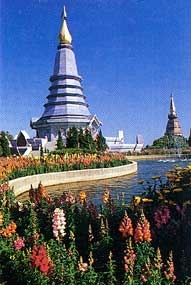
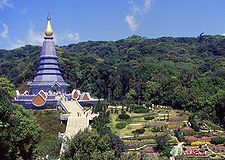
Doi Inthanon was declared a National Park in 1972 and covers an area of more than 1005 square kilometres and is probably Thailand’s best known National Park being the home of the country’s highest mountain, Doi Inthanon, which stands at 2565m (above sea level) and is thus dubbed ‘the Roof of Thailand’.the park is comprised of the largest tract of upper mountain forest Which ranges across Nepal, Bhutan, Myanmar, and ends in Northern Thailand. The mountain ranges gave birth to the main tributaries of the Ping river and formed the beautiful waterfalls, namely Siriphum, Wachirathan, Mae Pan, Mae Klang and Mae Ya. The moist and dense evergreen forest is abundant with lichens and wild orchids. The park is also a paradise for bird lovers. Visiting Doi Inthanon is possible throughout the year however,
the best period for viewing the waterfalls is May through November while the best period for viewing wild flowers is December through
The National Park is located only some 110 kms south west of Chiangmai making it ideal for a one-day trip from the city. Many tour companies offer this as a one-day tour but you should consider hiring a car, complete with driver if Thailand’s traffic is intimidating. This gives you increased freedom of movement and is the option I recently took along with three friends. Leaving Chiangmai we followed Highway 108 until just north of the town of Chom Thong where we turned off and made the ascent along the well-maintained road, directly to the summit.

At first glance the summit appears to be a disappointment with a sealed off military radar establishment at the end of the road. The best time to visit is in the cool season although at this altitude it can get a little chilly at all times of the year. In fact, not only is this Thailands highest point but also, according to records, its coldest. Today was no exception and as we set out to explore the two Thai members of our group, unaccustomed to the cold, were reaching for jackets immediately. We followed a path into the forest and reached a sign declaring this to be ‘the highest point in Thailand’

If you have more time Doi Inthanon is home to the Doi Inthanon Royal Project which can be found at Baan Khun Glang (บ้านขุนกลาง), about 11 kms off the main road near the kilometre 31 marker. The Project promotes a variety of agricultural practises through the mountain’s resident Karen and Meo hilltribe comunities and can be visited. Due to the climate on the mountain, cold weather flowers such as chrysanthemums and carnations make rare appearances for Thailand as do strawberries and apples.

There are also a number of hilltribe villages that can be seen but due to the number of visitors they receive the majority could hardly be described as unspoilt. We headed back towards Chiangmai but for a sample of hilltribe life we made a stop at a roadside Hmong market where the two ladies in our group stocked up on various produce that was well priced and not readily available in Chiangmai. Some of the elder Hmong were dressed in traditional costume and after making the effort to be polite, smiling a lot, and making a few purchases were only too happy to be photographed.
This was an enjoyable end to a thoroughly relaxing day and how I wished I could take the clear fresh air back into Chiangmai with us but held out little hope of such good fortune.


Doi Luang Chiang Dao

Doi Luang Chiang Dao
Doi Luang Chiang Dao is a limestone mountain in the Chiang Dao Wildlife Reserve area, Amphoe Chiang Dao. This cone-shaped mountain is 2,195 metres from sea level, which makes it the third highest mountain in Thailand after Doi Inthanon and Doi Pha Hom Pok. Narrow plains on top of the mountain overlook spectacular views that include a sea of fog on the Amphoe Chiang Dao side, Doi Sam Phi Nong, the Chiang Dao mountain range, and the far end of Doi Inthanon. The peak is cool and windy. It is full of rare highland flowers, birds, and butterflies. Visiting Doi Chiang Dao needs an approval letter from the Director of Wildlife Reserve Division, Royal Forest Department. Travel must be arranged at least 2 weeks in advance. Contact tel. 0 2561 2947 for more information.

How to Get There


From the town of Chaing Mai, take highway 107 to Amphoe Chaing Dao. Here you will go to Kilometer 76. Turn left here and go straight for five kilometers to the Chaing Dao Cave. Here you will see the mini bus that will take you Den Ya Khad Ranger Unit. The total distance from Chaing Mai is 77 kilometers

Doi Luang Chiang Dao

22 ส.ค. 2553

Chiang Mai

Doi-Suthep
Chiang Mai is Thailand’s second largest city, covering some 20,000 square kilometres. With a population of only 250,000 in the city, however, it does not even come close to the size of Bangkok.Many visitors stay in Chiang Mai longer than planned because of the high quality and low cost of accommodation, variety of cuisine and shopping, cool nights, international atmosphere and friendly people. With the increasing number of cultural and spiritual learning experiences available to visitors, Chiang Mai has become more than just a quick stop on the tourist trail.It lies about 800 kilometres north of Bangkok on a mountainous plateau 310 metres above sea level. The city stands along the Ping River, a major tributary of Bangkok’s Chao Praya River. Chiang Mai City also serves as the capital of Chiang Mai Province, which is home to around 700,000 people.
The province of Chiang Mai contains over 300 ancient temples, and some of the country’s oldest. Although rich with history and legendary, mystical attributes, Chiang Mai has developed into a modern, cosmopolitan city of friendly people and manageable size. Its central location makes Chiang Mai an excellent base for exploring the north of Thailand.Many people flock to Chiang Mai to do some trekking into the mountains or rafting down rivers. Others come purely for the fantastic shopping for handicrafts and furniture. Chiang Mai’s elegant hotels tucked in valleys and hillsides provide perfect romantic getaways or soul-searching retreats. As everywhere in this country, Thai cooking is superb and you’re sure to find a restaurant to suit your tastes.
Getting there is relatively easy. There are flights and trains from Bangkok daily as well as a good bus service. If your stay in Thailand is a short one, it’s only an hour’s flight from Bangkok to Chiang Mai.The mountains are taller here than anywhere else in Thailand. Mt. Inthanon, located 106km from Chiang Mai at 2565 metres is the tallest peak in the country. The cooler plains provide fertile soil where fruits, vegetables and tobacco are grown.It would be difficult to find a city that reflects more of the country's diverse cultural heritage than Chiang Mai. Tour buses crowd stunning temples, ablaze with the colour of saffron and humming with the chanting of monks. Hill tribe groups sell their wares in the busy market and local villages. Narrow streets lined with ornately carved teak houses lie in the shadow of contemporary skyscrapers.
Chiang Mai's heart is its Old City, an area surrounded by remnants of ancient walls and moats originally constructed for defence; yet Chiang Mai is a modern city with a growing infrastructure of modern shopping malls, international restaurants and condominiums. The contrast is part of the town's charm.
Whether you plan on a long visit or short, you will be touched by the friendliness of the people and the beauty of Chiang Mai.
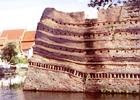
Chang Mai wall_city
History
Chiang Mai's historic strength derived from its important strategic location near a southern branch of the ancient Silk Road. Long before the modern influx of foreign visitors the city served as an important centre for handcrafted goods, umbrellas, jewellery (particularly silver) and woodcarving.Chiang Mai owes her existence to the Ping River which provided the trade route which could be extended beyond the wall of mountains that surround the Chiang Mai valley. It became a channel for trade from China and Burma to the Gulf of Siam. The wide, fertile valley, able to support a large number of people, became the basis of political power in the feudal kingdom of Lanna (Kingdom of One Million Rice Fields).Archaeological excavations show the area has been inhabited by humans for over two thousand years. However, the city of Chiang Mai was founded in 1296 by King Mengrai as the capital of the first independent Thai state, Lanna Thai. It became the cultural and religious centre of the northern Tai, who had migrated from southern China to dwell in Thailand, and remained so throughout the turbulent period of recurring Burmese attacks. The Burmese finally captured Chiang Mai in 1556 and occupied it until King Taksin retook the city in 1775, driving the Burmese forces back to near the present border. Burmese influence on religion, architecture, language, cuisine, and culture, however, remains strong.Local princes, called chao, remained in nominal control of the city in the late 18th and early 19th century, though they deferred to the King of Siam in Bangkok. In 1874, King Chulalongkorn (Rama V), concerned with encroachment by the British (who had teak-logging interests as occupiers of Burma) and fearful of a conflict with them, sent a commission to Chiang Mai, which eventually limited the power of the local princes and brought the Lanna Kingdom further under the control of the central government in Bangkok. In 1939, the city was formally and fully integrated into the kingdom of Thailand, becoming the administrative centre of the north. In 1996, the city celebrated its 700th anniversary.
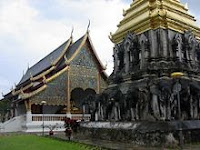
Wat_Chiang_Man
IN CHIANG MAI
Doi Angkhang, Doi Suthep, Doi Inthanon National Park, Elephant shows, Ob luang, Phu Ping Palace, Snake Farm, Chiangmai Zoo, Samoeng, Huay Kaew Waterfall, Khun Mae Ya, Travel, Hotels, Resorts, Tours, Waterfalls Chiangmai, Doi Suthep, Doi Pui, Doi Inthanon National Park, Huai Nam Dang, Mae Sa Waterfall, Hotels, Resorts and Travel.

Sponsored Link